
Identify Who Owns a Leake County Property
The quickest dependable route ties a taxable parcel to the deed that conveyed it. Open the Leake County Delta Property Link. It accepts a name, address, parcel number, section-township-range description, or PPIN. Treat the owner field as a lead rather than a verdict. Then carry the parcel key and legal description into the Chancery system, so the latest grantee gets checked against the same land.
- Enter the situs address in Delta Property Link and open the matching parcel.
- Copy the owner name, PPIN or parcel number, and legal description.
- Use those keys in the Chancery Clerk index and identify the newest deed.
- Read the newest grantee and confirm that the legal description matches.
The mail recipient is not always the landholder. This method pulls the owner of record straight from public property records instead. Rural tracts can defeat a street address search, though. When that happens, try the section, township and range or the PPIN rather than guessing at more street formats.
Trace the Leake County Owner Field From Delta
Delta's property search is the natural first stop for ownership. It ties an owner name to one taxable parcel. The portal does warn that its uploaded data can lag courthouse activity. After a recent closing, that lag matters. A deed may sit recorded at the recorder. But the displayed tax owner can still show the old name. Treat the result as a source of stable land identifiers. Do not just copy the name. The entry screen offers five local paths: Name, Address, Parcel Number, Section/Township/Range, and PPIN. A name search helps when someone holds several parcels. But an address or PPIN is safer where two people share a name. Remember that the tax mailing address and the situs can differ. One shows where notices go. The other shows the land itself. The official Delta owner-search screen lays out all five options.
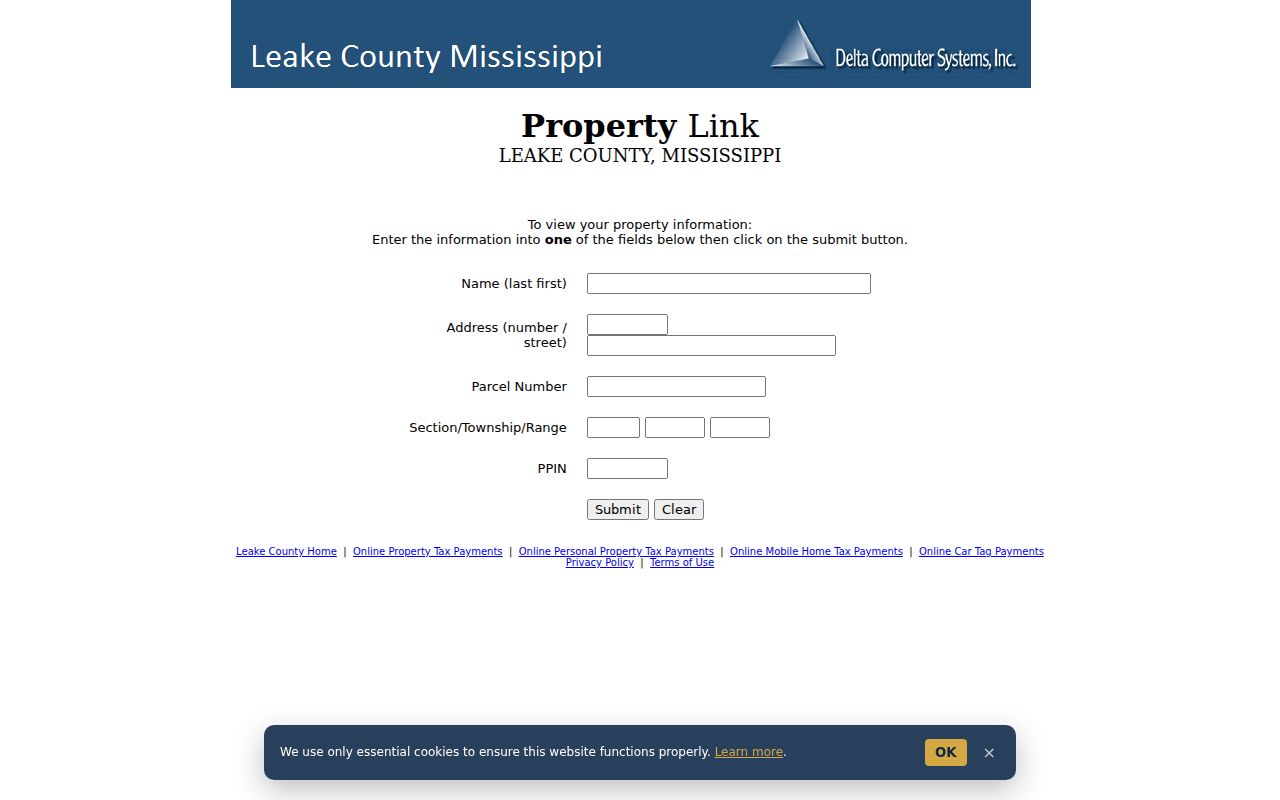
Those visible fields tell a story. A PPIN can carry an imperfect street search straight to one exact assessment account in the Leake County property records.
Match Leake County Ownership Across Public Sources
No single screen settles every ownership question. The assessment roll names the tax owner. The deed index records conveyances. The parcel map confirms that the geometry and the identifier fit together. Mississippi business records can explain an entity name, yet the deed still governs; the strongest answer to who owns a parcel is the one where identifiers match across the deed records, tax roll, and plat.
| Source | Owner Info It Gives | Access |
|---|---|---|
| Delta tax roll | Tax owner, mailing address, parcel key | Online property search |
| Chancery DuProcess index | Newest grantee and recorded instrument | Online index or clerk counter |
| Mississippi business search | Business entity and registered agent | Online state search |
| Leake ArcGIS viewer | Parcel shape and map context | Online map |
Ownership records track legal and tax interests, not residency. A mailing field may show a post-office box, an accountant's office, or a house in another town. That address is not the land. The parcel's situs marks the physical location, so keep both details in your notes, yet treat neither as proof of who lives there.
Confirm the Leake County Property Owner in DuProcess
The DuProcess inquiry run by the Leake County Chancery Clerk opens the deed index to anyone tracing an owner of record. Grantor and grantee names lead the way. Filters cover instrument number, book and page, address, parcel, PPIN, subdivision, block, lot, consideration, and date. Start with the tax-roll name as grantee. Every deed that name received appears. Compare the newest plausible filing against the parcel keys. It must describe the subject parcel to matter. When an online result lacks an image or detail, the portal offers a notification form. The Chancery Clerk also works from the counter at 101 Court Square in Carthage, reachable at 601-267-7371. A counter visit is the sensible fallback. Go in person when a scan is missing, an index entry reads ambiguously, or an official copy is required; the Clerk will not, however, run title searches or hand out legal advice. Note: A grantee name tells you who received an interest only after the document and its legal description are read together.
Read LLC, Trust, and Estate Owners in Leake County
An owner field often holds a company, trust, or estate rather than a person's name. Copy that wording exactly. One dropped word can break the trail from the tax roll into the deed index. For a company, the Mississippi Secretary of State business search runs on a business name, business ID, officer, or registered agent. It pins down the entity record. It does not prove the agent owns the land. Trusts and estates need more care. Leake Chancery records include both probate and land matters, and a deed can name a trustee, executor, administrator, or heirs as parties. Search the entity wording and the named fiduciary together. Hold the chain to the parcel's legal description, since estate records explain authority or succession while the recorded conveyance remains the ownership checkpoint.
- Owner of record
- The party shown by the public roll or latest matched conveyance.
- Grantee
- The party receiving the interest described by a deed.
- Situs address
- The physical location assigned to the parcel.
- Mailing address
- The destination used for tax notices, which may be elsewhere.
Account for Leake County's January 1 Owner Rule
Leake County's tax statement follows a simple rule. The Tax Collector lists whoever owned the parcel on January 1 of that year. A sale recorded later in the year can therefore leave two honest but time-specific answers. The tax bill names the January owner of record. The newer deed names the later grantee. Delta also notes that its uploads can lag behind courthouse activity. The county publishes no figure for that delay.
When the timing is close, write down the date attached to each source. The newest deed usually beats the tax roll. That is why the full present-owner analysis belongs on the current-owner page. The method here simply points the searcher toward the more recent evidence.
Recent-sale check. A post-January deed may be newer than the tax statement, so confirm the latest grantee before relying on the displayed owner.
Avoid Leake County Same-Name and Rural-Address Errors
Names drift, and rural street descriptions drift even more. Land identifiers solve that problem. Delta accepts searches by parcel number, PPIN, and section-township-range. DuProcess goes further with subdivision, block, lot, square, legal description, patent, and consideration fields. Pick the strongest shared key and copy its punctuation and leading characters exactly as displayed.
For land without a dependable street match, compare section, township, and range against the parcel map. Then check them against the deed's legal description. For a town lot, compare subdivision, block, and lot instead. Leake County publishes no official public explanation of its complete PPIN format. The safe practice is to copy the identifier straight from an official result. Never build one by hand. A map polygon adds context, but it is no survey.
Note: A legal description can tie old and new records together. This holds even after an address or owner spelling has changed.
Monitor Leake County Filings Without a Located Fraud Alert
Leake County offers no official property-fraud-alert signup. Do not assume a vendor fills that gap. A practical routine works fine without one. Search the Chancery portal on a set schedule by owner and parcel. Open any unfamiliar filing and pull the instrument image. Call the Clerk about anything missing or unclear. Suspected fraud can go to law enforcement or the Attorney General through the proper channels.
The official records landing page is the right starting point. It covers the current inquiry and the historic virtual index.
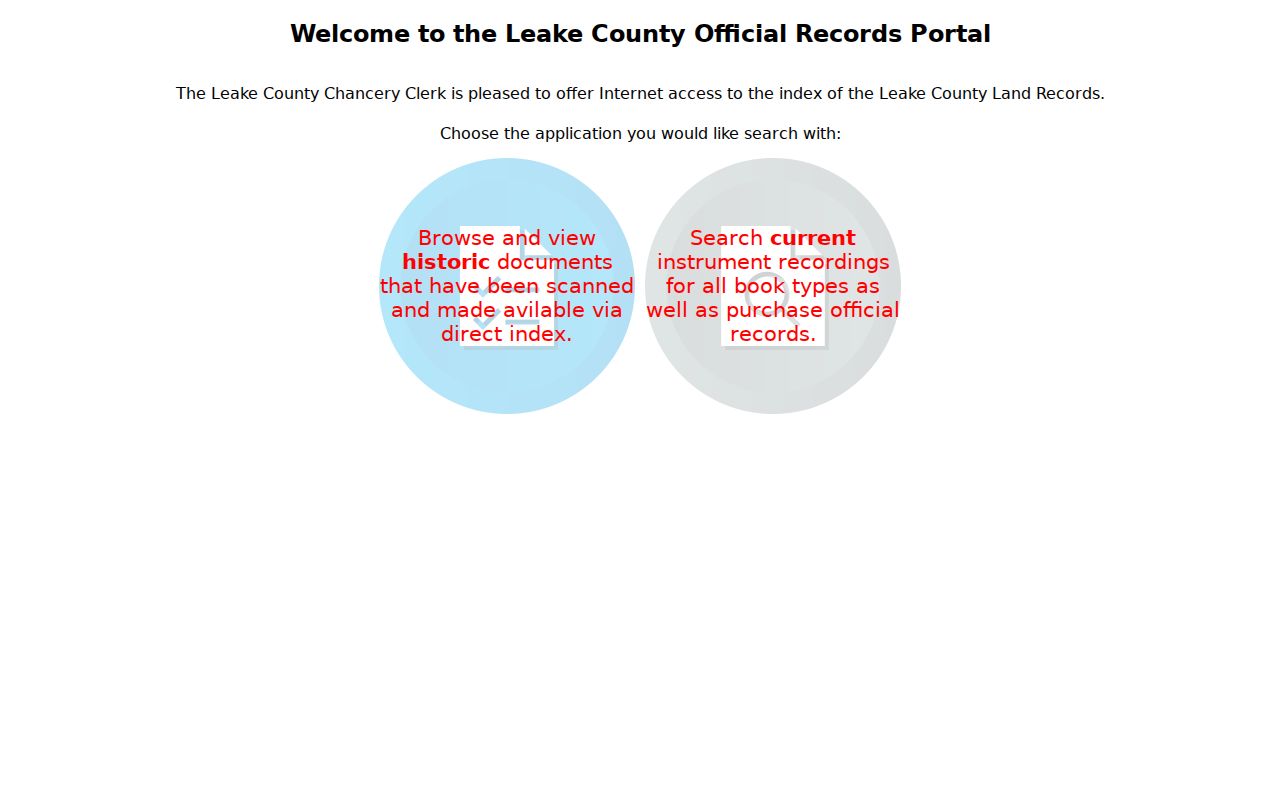
The landing page supports direct record checks, though Leake County still offers no separate official alert enrollment.
Know What a Leake County Owner Lookup Cannot Prove
An ownership lookup can tell you the name on a tax account and the grantee on a recorded deed. It cannot prove that every competing claim, easement, lien, probate interest, or unrecorded matter is settled. It cannot establish a surveyed boundary or current occupancy either. Nor can it confirm the authority of someone who simply receives mail for an entity.
Mississippi's Address Confidentiality Program, set out in Mississippi Code §99-47-1, shields qualifying participants behind a substitute address with mail forwarding. Public sources may also withhold certain fields under specific exemptions. Never try to work around a protected address. For purchases, estates, or disputed title, get the official copies and qualified title advice.
Lawful use. Leake County owner records support property research and due diligence. They must never be used to stalk, harass, threaten, or target a person.